


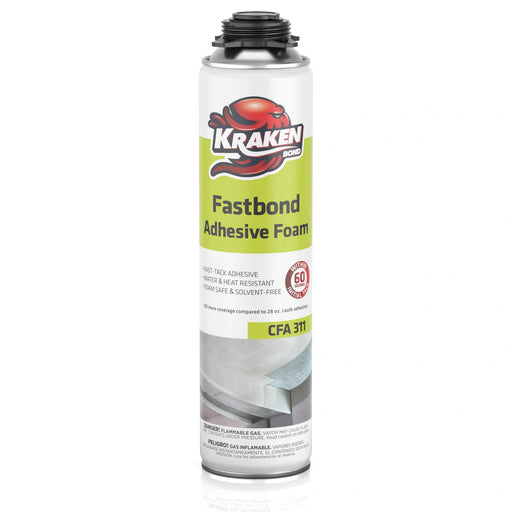

Adhesive Foams are high-performance polyurethane foam adhesives designed for fast, strong, and durable bonding across construction, insulation, flooring, and masonry applications. With rapid curing, minimal expansion, and excellent adhesion to concrete, wood, brick, foam panels, drywall, and subfloor assemblies, these professional-grade adhesives outperform traditional cartridge glues in speed, coverage, and ease of use. Ideal for contractors and DIY users, adhesive foams reduce installation time, cut material waste, and provide long-lasting structural strength.
Why Use Adhesive Foam?
Adhesive foam provides several advantages over traditional construction adhesives:
- Fast Cure Times: Initial grab in 60 seconds; full bond typically within minutes.
- High Strength: Excellent adhesion to XPS, EPS, concrete, wood, metal, brick, stone, and subfloor materials.
- Minimal Expansion: Prevents misalignment and ensures precise panel placement.
- High Yield: One can replaces multiple tubes of caulk or construction adhesive.
- All-Season Performance: Many formulas work in cold temperatures and damp, frozen, or treated lumber.
- Lightweight & Efficient: Easier handling and reduced labor time.
- Thermal & Acoustic Benefits: Adds insulation value within assemblies.
- Interior & Exterior Use: Weather-resistant, waterproof, and mold-proof formulas available.
For more bonding and sealing solutions, explore our full range of Foam Adhesives.
Best Uses for Adhesive Foam
- Bonding EPS/XPS foam insulation boards
- Installing drywall and interior panels
- Subfloor bonding to reduce squeaks and nail pops
- Securing OSB, plywood, joists, and floor sheathing
- Concrete, brick, stone, and block bonding
- Landscape blocks and decorative stone installation
- Fixing trims, moldings, and architectural elements
- Wood-to-concrete bonding
- Adhesive for lightweight construction materials
- Fast assembly and structural repairs
How to Apply Adhesive Foam
- Clean surfaces thoroughly, ensuring they are dry, free of dust, grease, and debris.
- Bring the can to room temperature (around 68°F / 20°C).
- Shake vigorously and attach the can to a foam gun applicator.
- Hold the can upside down and apply adhesive beads, 0.3–1.2 inches (0.75–3 cm) in diameter, depending on the application.
- Position materials immediately; most foams bond within minutes.
- For subfloors, allow foam to settle for a few minutes before setting panels.
- Trim or protect cured foam with plaster or paint if exposed.
- Clean uncured foam with foam cleaner; remove cured foam mechanically.
Recommended Adhesive Foam Products
Below are our top-rated polyurethane adhesive foams trusted for insulation board installation, subfloor bonding, concrete and stone applications, and general construction.
Stanley Adhesive Foam Series
Professional-grade construction and subfloor adhesives engineered for high strength, fast curing, and all-season jobsite performance.
Kraken Bond Fastbond Construction Adhesive Foam
High-yield, rapid-bonding adhesive ideal for EPS/XPS, masonry, stone, and decorative construction elements.
Akfix 960P Construction Adhesives
Polyurethane adhesives are designed for high-precision masonry work, panel installation, and indoor/outdoor construction.
Frequently Asked Questions (FAQ)
What is adhesive foam used for?
Adhesive foam is used for bonding insulation boards, drywall, subfloors, masonry, concrete, wood, panels, and lightweight construction materials.
Is adhesive foam stronger than traditional construction adhesive?
Yes. Polyurethane adhesive foams typically offer faster curing, higher coverage, and excellent strength on concrete, wood, metal, stone, and foam panels.
Can adhesive foam be used for EPS and XPS insulation?
Absolutely. These products are specifically formulated to bond polystyrene insulation boards without melting the foam.
Does adhesive foam expand?
Most adhesive foams offer minimal expansion, with products like Stanley FA192P providing true non-expanding performance for precision work.
What should I do if adhesive foam is not sticking?
Ensure surfaces are clean, slightly moist (if recommended), and free of dust or oils. Cold can temperatures can also reduce adhesion.
Is adhesive foam waterproof?
Most polyurethane adhesive foams are water-resistant once cured and suitable for exterior use.
How long does adhesive foam take to cure?
Tack-free in 3–10 minutes, depending on the formula; full cure typically within 24 hours.
Can adhesive foam bond stone, brick, or concrete?
Yes. Formulas like Akfix 962P and Kraken Fastbond are designed for masonry, landscape blocks, stone, and decorative concrete elements.